27
Jun
Commercial Refrigeration Repair: What to Do When a Fridge or Cold Room Fails
When a commercial fridge, freezer or cold room fails, protect your stock first: keep the doors shut, check and record the temperature, move high-risk stock to working storage if the temperature is rising, and call a refrigeration engineer. Then work out what went wrong, so it doesn't happen again.
This guide is for kitchens, shops and anyone storing chilled or frozen stock. It covers the first hour, the faults behind most breakdowns and how to prevent them. Our commercial refrigeration repair engineers answer emergency calls 24 hours a day, 7 days a week.
The first hour: protecting your stock
A well-loaded fridge or freezer holds its temperature for a while if it stays closed. What you do in the first hour decides how much stock you keep.
- Keep the doors closed. Every opening lets cold air out and warm, moist air in. Put a sign on the door so staff don't keep checking inside.
- Check the temperature and write it down. Note the reading and the time, then check again at regular intervals. A probe thermometer in the stock is more useful than the display, which reads the air.
- Make the quick checks. Is it plugged in and switched on? Has a breaker tripped? Is the controller display on, and is it showing an alarm or error code? Is the door closing fully? Is anything blocking the condensing unit? Could it be partway through a defrost?
- Move stock if the temperature is rising. Start with the highest-risk items, such as raw meat and fish, dairy, cooked foods and medicines, and move them to working fridges or freezers.
- Follow your food safety procedures. Your food safety management system should say how to decide what can be kept and what must be thrown away. If you're not sure, ask your local authority's environmental health team rather than guess.
- Call an engineer. Have the make and model, any error code, your temperature readings and anything you noticed, such as ice, water, a new noise or a smell.
Keep a record. Write down the temperatures, the times, what you moved and what you threw away. It supports your food safety records, and it's useful for an insurance claim if stock is lost.
Common faults and what causes them
Most breakdowns come from a small number of faults. Knowing them helps you describe the problem and spot the warning signs earlier next time.
Ice building up on the evaporator
The evaporator is the coil inside the cabinet or cold room that takes heat out. If ice builds up on it, air can't pass through and the temperature rises. The usual causes are a defrost fault (a heater, timer or controller), a blocked drain, a failed evaporator fan, or warm, moist air getting in through a door left open or a worn seal.
A blocked or dirty condenser
The condenser gets rid of the heat taken out of the cabinet. Dust, kitchen grease and boxes stacked against it stop it doing that, so the compressor works harder and may cut out on a safety switch. In a hot kitchen or a cramped plant room, this is one of the most common causes of a fridge that can't keep up.
Worn or damaged door seals
A split or flattened seal lets warm, damp air in all the time. Signs include frost around the door, the unit running constantly and condensation on the outside. Close the door on a sheet of paper: if it slides out easily at any point, the seal isn't gripping there.
Compressor and fan faults
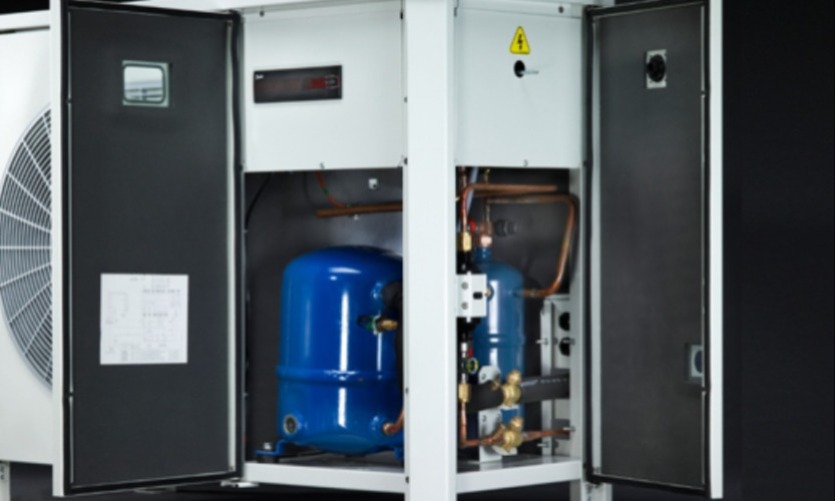
The compressor drives the whole system. Signs of trouble include clicking without starting, switching on and off every few minutes, or a hot, noisy unit. Often the cause is an electrical part that starts or protects the compressor rather than the compressor itself. Failed condenser or evaporator fans cause similar symptoms and are a common, straightforward repair.
Controller and sensor faults
The controller decides when to cool and when to defrost, based on its sensors. A faulty sensor, a failed controller or settings changed by mistake can leave a cabinet too warm, too cold or stuck in defrost. Error codes and alarms usually point to the right area.
Refrigerant leaks
A system doesn't use up its refrigerant, so a low charge means a leak. Signs include cooling that slowly gets worse, longer running times, ice in odd places and oily marks on pipework. Finding and repairing the leak, then refilling the system, must be done by an F-Gas certified engineer. We're REFCOM registered for this work. Topping up without fixing the leak only puts off the next breakdown.
Preventing breakdowns with planned maintenance
Most breakdowns start as something small that nobody spotted: a condenser slowly clogging, a seal starting to split, a slow leak. Planned maintenance catches these early. It also keeps running costs down and gives you records to show your equipment is looked after. A maintenance visit typically includes:
- Cleaning condensers and evaporators
- Checking door seals and hinges
- Checking defrost operation and drains
- Checking refrigerant pressures for signs of a leak
- Checking controllers and alarms read correctly
- Recording temperatures and the work done
Our maintenance contracts are quoted for each site, with visits planned around your opening hours. Systems that need statutory F-Gas leak checks get them on schedule, and we keep the records for you.
Daily habits that help
- Keep the area around condensing units clear and free of boxes
- Don't overload cabinets so stock blocks the air vents
- Close doors properly and wipe seals clean
- Record temperatures every day, so a slow rise shows up early
- Report ice, water, new noises or alarms as soon as staff notice them
24/7 commercial refrigeration repair
We repair all major makes of commercial refrigeration, including cold rooms, walk-in freezers, refrigerated display cabinets, and upright and counter fridges and freezers. We work with restaurants, pubs, cafes, hotels, shops, butchers and pharmaceutical storage.
Our engineers have more than 30 years' experience in refrigeration. They work from ATE House in Carlin How, near Saltburn-by-the-Sea, and our office in Whitby, covering Tyne and Wear, Northumberland, County Durham, North Yorkshire and East Yorkshire.
We also repair and service air conditioning and heat pumps, so one team can cover all your systems. Our guide to common air conditioning faults covers the cooling side of the building.
Call for refrigeration repair
If a fridge, freezer or cold room has failed, protect your stock, then call us any time of day or night. For planned maintenance, ask us for a quote for your site.
Call 01287 281014 or 07931 908711, email info@ateservices.co.uk, or visit our commercial refrigeration repair page.