17
Sep
Get Your Air Source Heat Pump Winter Ready: Checklist and Service Plans
To get an air source heat pump ready for winter, keep the outdoor unit clear of leaves and snow, leave the system switched on through cold snaps, check the system pressure, set your controls to run steadily at a low flow temperature, and book its yearly service in the autumn. Most of the checklist below takes a few minutes and no tools.
The service is the part to leave to an engineer. Our heat pump servicing covers the outdoor unit, controls, water quality and cylinder, and our heat pump service plans include it every year, with the current prices further down this page.
Your winter checklist
1. Keep the outdoor unit clear of leaves, snow and ice
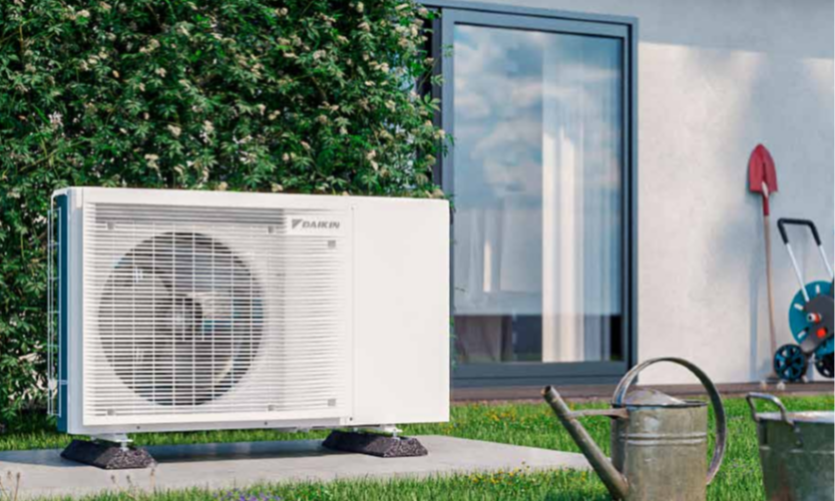
The outdoor unit takes heat from the air that passes through it. Leaves on the coil and snow drifting against it cut that airflow, and the heat pump works harder for less heat. Through autumn, clear leaves from the grille and around the base. After snowfall, brush snow gently off the top and away from the sides and base with a soft brush. Never use a shovel edge or anything sharp near the coil, as the fins bend easily.
2. Don't block the airflow
Don't put a cover over the unit in winter, and don't stack logs, bins, garden furniture or pots around it. Air needs to get in and out freely. Your installation handbook gives the clear space your model needs. If you're thinking about an enclosure or screen, check with us first, as the wrong one can trap cold air and stop it working properly.
3. Know what the defrost cycle looks like
In cold, damp weather, frost forms on the outdoor coil. Every so often the heat pump reverses briefly to melt it. When this happens:
- The fan stops, and you may hear a whoosh or a click as it switches over
- A cloud of steam rises from the unit. This is water vapour, not smoke, and it's normal
- Water runs out from underneath
- The heating pauses for a few minutes, then carries on
Make sure the meltwater can drain away. If the area under the unit is blocked, it can freeze into a layer of ice that builds up into the base.
4. Check the system pressure
If your system has a pressure gauge, usually near the indoor unit or cylinder, check it before winter and now and then through it. Your handbook gives the right range. A pressure that keeps dropping can mean a leak or a problem with the expansion vessel, so call an engineer. Many heat pumps have glycol, an antifreeze, in the system, so don't top it up with tap water unless your installer has told you it's safe for your system.
5. Leave it switched on in cold snaps
It can be tempting to switch the heat pump off when it's very cold, or when you go away. Don't. It uses power to protect itself from freezing, and a heat pump that's switched off in a hard frost can freeze. If you're going away, use the holiday or frost protection setting on your controller instead.
6. Check your settings and flow temperature
A heat pump is most efficient when it runs steadily at the lowest water temperature that keeps your home warm. Before winter:
- Check weather compensation is on, if your system has it, so the water temperature rises only as it gets colder outside
- Check the heating and hot water schedules still suit how you live
- Avoid big boosts. Turning the thermostat right up doesn't heat the house faster, it just makes the heat pump work harder
- Check the clock is right after the clocks go back, so schedules run at the right times
If you're not sure your settings are right, ask the engineer to review them at your service. It's part of every visit.
7. What to do if it ices over
A light frost that clears after each defrost is normal. Call an engineer if:
- Thick ice builds up and doesn't clear, especially on the fan or base
- The fan is stuck or frozen in place
- The unit has stopped and shows an error code
- Your radiators or hot water are going cold
Don't chip at the ice, and don't pour boiling water on the unit. Both can damage the coil, the fan or the refrigerant pipework. Write down any error code and the model number, and check whether the drain under the unit is blocked.
Frost damage isn't covered by our Premium Protect plan. Keeping the unit clear and leaving it switched on is the simplest way to avoid it.
Why an autumn service helps
A heat pump works hardest in the coldest months. An autumn service finds small problems while the weather is still mild, rather than in the middle of a cold snap when you need the heating most.
Our engineers check:
- The outdoor unit: clean and inspect the coil and fan, clear debris and check airflow around it
- The defrost operation and the condensate drain
- The refrigerant circuit for signs of a leak
- System pressure, the expansion vessel, pumps and valves
- Water quality: system water, glycol or inhibitor
- Filters and strainers, cleaned where needed
- Electrical connections
- Your controls, schedules and flow temperatures
- The cylinder and its safety valves, on systems with a cylinder
Most visits take one to one and a half hours on site. You get a PDF service report afterwards. Most manufacturers need a yearly service by a qualified engineer to keep the warranty valid, so check your warranty paperwork for what yours requires. Our guide to what a heat pump service includes goes through each step, and how much does a heat pump service cost? explains what affects the price.
Heat pump service plans
Our plans are 12-month rolling contracts for homeowners with air source heat pumps. Each one includes the annual service and a PDF report.
Heat Pump & Cylinder Plan
An annual service of the heat pump and cylinder, with a safety, efficiency and system check covering radiators, underfloor heating and controls. It includes a system water, glycol and inhibitor check, a free inhibitor top-up (not antifreeze or glycol), prioritised attendance and engineer-led advice if it breaks down, and 10% off parts and labour. Repairs and parts aren't included.
Hybrid System Plan
The same as the Heat Pump & Cylinder Plan, but it services the heat pump, the boiler and the cylinder. We're Gas Safe registered, so one engineer covers the whole system.
Premium Protect Plan
For heat pump and cylinder systems under 10 years old. It adds up to 3 emergency breakdown visits a year, and parts and labour on qualifying mechanical and electrical components up to £1,800 in each 12-month period, with a priority helpline. Cover starts 30 days after the first service. It doesn't cover pipework, radiators or underfloor loops beyond the unit, wear, frost damage, neglect, scale, user-error call-outs, obsolete parts or faults found at the first service. When the system reaches 10 years old, the plan can switch to labour-only cover.
| Plan | Pay monthly | Or pay yearly | Who it's for | Contract |
|---|---|---|---|---|
| Heat Pump & Cylinder Plan | £19 a month | £228 a year | For homes with a heat pump and hot water cylinder. | 12-Months Rolling Contract |
| Hybrid System Plan | £25 a month | £300 a year | For homes with a heat pump, boiler and cylinder setup. | 12-Months Rolling Contract |
| Premium Protect Plan | £49 a month | £588 a year | Parts & Labour for homes with a heat pump and hot water cylinder less than 10 years old. | 12-Months Rolling Contract |
The plans are for homes. If you look after heat pumps for a business, see our guide to commercial heat pump maintenance, which is quoted for each site.
Get your heat pump winter ready
Our engineers are MCS certified, Daikin Approved and REFCOM registered for F-Gas work. They work from ATE House in Carlin How, near Saltburn-by-the-Sea, and our office in Whitby, covering Tyne and Wear, Northumberland, County Durham, North Yorkshire and East Yorkshire.
Choose a plan on our heat pump service plans page, read more about our heat pump servicing, or call 01287 281014 or 07931 908711. You can also email info@ateservices.co.uk.